Here we go. This is the perfect merge of our professions: concrete and infographics. This blog has almost reached nirvana. Unfortunatelly there is no art involved. The survey is about concrete floors.
But look at that! Cool infographics created some really useful stuff about the conception of concrete and use of concrete flooring.
People would normally go for multiple colours but then... the next most popular are brown tones.Ugh. How come?
11 November 2010
09 November 2010
Mircea Cantor
Moloko Magazine is featuring Mircea Cantor today - and this should be a special post for us too to showcase his work.
Especially that one of the blog's contributor, Ferenc Csurgai was very (very) closely involved in the process of creating the huge Christmas presents as a collaborator. And yes...they are really huge. They are very actual at the end of the year in the festive season indeed.
Of course these are all made of concrete.
see more: http://www.mirceacantor.ro/see.htm
Especially that one of the blog's contributor, Ferenc Csurgai was very (very) closely involved in the process of creating the huge Christmas presents as a collaborator. And yes...they are really huge. They are very actual at the end of the year in the festive season indeed.
Of course these are all made of concrete.
see more: http://www.mirceacantor.ro/see.htm
03 October 2010
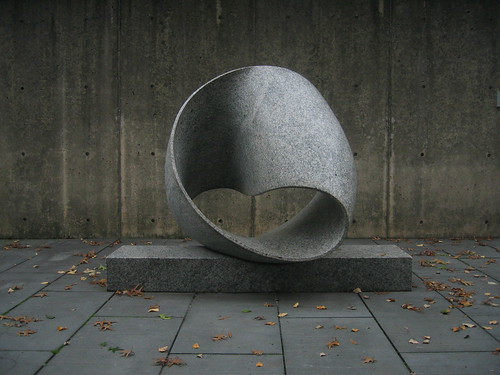
Max Bill - Endless Ribbon
Searching for concrete art on Google I've stumbled into another concrete-related blog here on blogspot.com.
artconcrete.blogspot.com is also collecting concrete related art and I found Max Bill's sculpture there.
Concrete art was closely related to constructivism, an earlier movement that tried to reflect the industrial world by constructing art or sculpture through processes similar to what industry might have used. "Constructivism is a purely technical mastery and organisation of materials," said a 1923 manifesto. You can understand how constructivism influenced concrete art in the avoidance of meaning and symbolism.
Will follow Art Concrete in the future - hope they'll carry on with interesting findings from the world of concrete art.
artconcrete.blogspot.com is also collecting concrete related art and I found Max Bill's sculpture there.
Concrete art was closely related to constructivism, an earlier movement that tried to reflect the industrial world by constructing art or sculpture through processes similar to what industry might have used. "Constructivism is a purely technical mastery and organisation of materials," said a 1923 manifesto. You can understand how constructivism influenced concrete art in the avoidance of meaning and symbolism.
Will follow Art Concrete in the future - hope they'll carry on with interesting findings from the world of concrete art.
01 October 2010
Anish Kapoor - Concrete Piping Machine
Anish Kapoor is a celebrity and there's no need to introduce him. He has several works exhibited around London and wins ever growing number of prizes each year.
However I didn't know that last September he had an exhibition at the Royal Academy.
He created a machine (well, it's a pipe, connected to a computer) that creates formed material. The result is this endless spaghetti (let's consider it a spaghetti for now) which covered the whole floor of the gallery.
Royal Academy went further than calling it spaghetti:
[...] "using a computer programme similar to those employed by architects, a technician translates them into instructions that guide the machine. The process is simple: liquid concrete is shovelled into a hopper, from where it travels along a plastic pipe to be extruded in long, intestinal coils or short, turd-like lengths that accumulate to make up different forms; so far there are pyramids, nests, boats, triangles, ovals, lattices, spirals, beds, cubes and cylinders. The texture of some is dry and crumbly, while others appear liquid; some are dark grey, others spotted with white blobs of the polystyrene added to lessen the weight."
Sources:
http://www.royalacademy.org.uk/ra-magazine/autumn-2009/features/
http://nialldebuitlear.com/blog/?p=623
http://barnmotskogen.blogspot.com/2009/11/anish-kapoor-royal-academy-of-arts_18.html
http://www.anishkapoor.com/
However I didn't know that last September he had an exhibition at the Royal Academy.
He created a machine (well, it's a pipe, connected to a computer) that creates formed material. The result is this endless spaghetti (let's consider it a spaghetti for now) which covered the whole floor of the gallery.
Royal Academy went further than calling it spaghetti:
[...] "using a computer programme similar to those employed by architects, a technician translates them into instructions that guide the machine. The process is simple: liquid concrete is shovelled into a hopper, from where it travels along a plastic pipe to be extruded in long, intestinal coils or short, turd-like lengths that accumulate to make up different forms; so far there are pyramids, nests, boats, triangles, ovals, lattices, spirals, beds, cubes and cylinders. The texture of some is dry and crumbly, while others appear liquid; some are dark grey, others spotted with white blobs of the polystyrene added to lessen the weight."
Sources:
http://www.royalacademy.org.uk/ra-magazine/autumn-2009/features/
http://nialldebuitlear.com/blog/?p=623
http://barnmotskogen.blogspot.com/2009/11/anish-kapoor-royal-academy-of-arts_18.html
http://www.anishkapoor.com/
20 September 2010
Lucidi Pevere Design Studio - Concrete Lamp
APLOMB Lamp from Foscarini from Contemporist on Vimeo.
Aplomb is a concrete lamp by Paolo Lucidi and Luca Pevere
http://www.lucidipevere.com
19 September 2010
Grupo Bondi - concrete ottoman chair
This piece is exhibited at the London Design festival this year, 2010.
The Argentine pavilion at 100% Design will showcase the work of eight designers, including Grupo Bondi’s Concrete bench – a cast concrete ottoman, for indoor or outdoor use.
Gruop Bondi also have some other interesting pieces that look like fluffy cushions however they are all made of concrete. Great concepts of garden furniture.
Links:
http://www.grupobondi.com.ar/
http://www.londondesignfestival.com/
The Argentine pavilion at 100% Design will showcase the work of eight designers, including Grupo Bondi’s Concrete bench – a cast concrete ottoman, for indoor or outdoor use.
Gruop Bondi also have some other interesting pieces that look like fluffy cushions however they are all made of concrete. Great concepts of garden furniture.
Links:
http://www.grupobondi.com.ar/
http://www.londondesignfestival.com/
Zaha Hadid - Urban Nebula
This piece was one of the artworks at the London Design Festival in 2007.
"Manufactured by Aggregate Industries, Zaha Hadid's Urban Nebula explored the plastic quality of pre-cast concrete and its potential as a medium for repetitive and fluid form.
The work, weighing 28 tonnes, was composed of 150 unique blocks of highly polished black pre-cast concrete bolted together to form a perforated wall. For many people it transformed their view of concrete.
Urban Nebula was exhibited at the Southbank Centre for a month from mid September 2007 where it was viewed by over one million people and attracted extensive press coverage — not just in the trade press but across national newspapers, monthly magazines and international publications.
Ben Evans, London Design Festival Director remembers the work being installed on the South Bank. 'Zaha chose to go with highly polished black concrete. And she created a form that was 150 concrete blocks that had near zero tolerance. Which meant that if one of them was 5mm to the left the whole thing didn't fit together. It was a challenge to install this but it was a very, very beautiful piece of work."
Some pictures from ZH blog about the manufacturing process
Source:
http://www.londondesignfestival.com/page/size-matter-2007-zaha-hadid
http://zahahadidblog.com/projects/2007/08/17/urban-nebula
"Manufactured by Aggregate Industries, Zaha Hadid's Urban Nebula explored the plastic quality of pre-cast concrete and its potential as a medium for repetitive and fluid form.
The work, weighing 28 tonnes, was composed of 150 unique blocks of highly polished black pre-cast concrete bolted together to form a perforated wall. For many people it transformed their view of concrete.
Urban Nebula was exhibited at the Southbank Centre for a month from mid September 2007 where it was viewed by over one million people and attracted extensive press coverage — not just in the trade press but across national newspapers, monthly magazines and international publications.
Ben Evans, London Design Festival Director remembers the work being installed on the South Bank. 'Zaha chose to go with highly polished black concrete. And she created a form that was 150 concrete blocks that had near zero tolerance. Which meant that if one of them was 5mm to the left the whole thing didn't fit together. It was a challenge to install this but it was a very, very beautiful piece of work."
Some pictures from ZH blog about the manufacturing process
Source:
http://www.londondesignfestival.com/page/size-matter-2007-zaha-hadid
http://zahahadidblog.com/projects/2007/08/17/urban-nebula
Subscribe to:
Posts (Atom)